Rubbish collection near Lords Cricket Ground efficient options
Posted on 13/10/2026
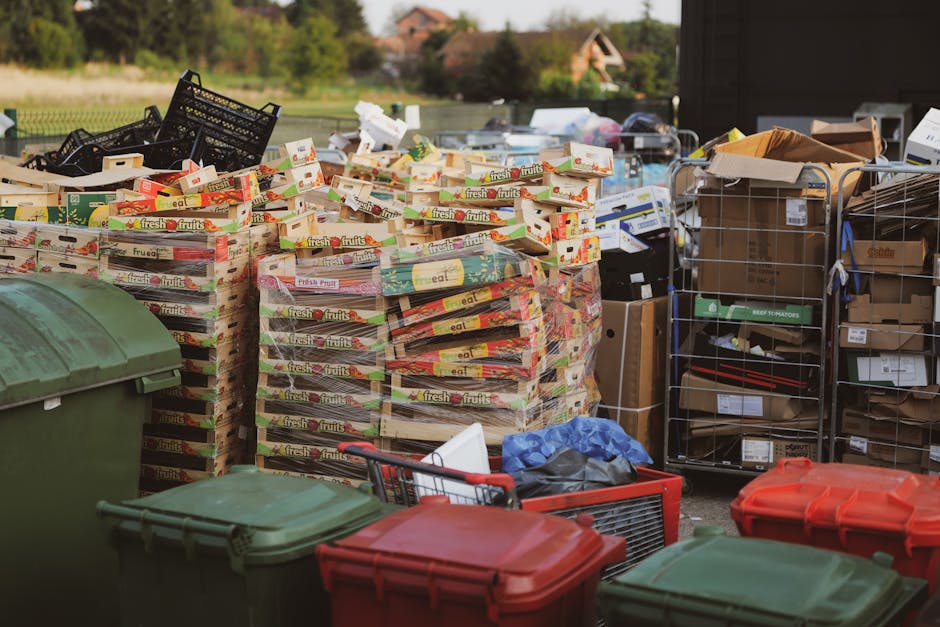
If you are trying to sort rubbish collection near Lords Cricket Ground efficient options, you are probably after something simple: a fast, tidy, no-fuss way to get waste removed without disrupting the day. Around Lord's, that matters more than people think. Roads can be busy, parking can be awkward, and timing often has to work around homes, offices, match days, renovations, or just the usual London shuffle.
The good news? There are several practical ways to handle waste collection well, from one-off household clearances to larger building and office jobs. The trick is choosing the right method for the amount of rubbish, the access available, and how quickly it needs to disappear. In this guide, we'll walk through what efficient rubbish collection actually looks like in this area, what to compare, what to avoid, and how to make the process easier from the start. No fluff, just the useful bit.
Why Rubbish collection near Lords Cricket Ground efficient options Matters
In an area like St John's Wood and the streets around Lord's Cricket Ground, waste removal isn't just about "getting rid of stuff". It is about doing it efficiently, quietly, and without creating extra hassle for neighbours, landlords, or building managers. If you've ever watched a bulky sofa sit in a hallway for two days too long, you'll know the feeling. It starts as an inconvenience and quickly turns into a small, annoying problem that everyone notices.
Efficient rubbish collection matters because the local environment puts pressure on timing and access. Narrow roads, controlled parking, limited loading windows, and busy foot traffic can make a simple clearance feel oddly complicated. Around match days, that challenge can ramp up again. The smarter the plan, the less likely you are to end up with delays, extra labour, or waste left on-site while you wait for a second attempt.
There is also a practical money angle. Poor planning often means paying for more time than you need, or choosing a service that is too small for the job and then having to book again. Better planning usually means a smoother collection, fewer surprises, and less disruption. Truth be told, that is what most people want anyway.
Expert summary: The most efficient rubbish collection near Lord's is usually the one that matches the waste type, access conditions, and urgency as closely as possible. Fast does not always mean best; well-planned is usually best.
How Rubbish collection near Lords Cricket Ground efficient options Works
Most rubbish collection services follow a fairly similar flow, though the exact details depend on the provider and the type of waste. The process usually starts with a description of what needs collecting, where it is located, and how quickly you want it gone. Photos help a lot here. A few clear images can save a surprising amount of back-and-forth. They also stop the classic "that looked smaller in my head" problem.
Once the waste is assessed, a provider will normally suggest one of a few collection methods. For smaller domestic loads, that might be a same-day or next-day man-and-van style service. For larger amounts, it may be a planned clearance involving two operatives, a larger vehicle, or a combination of collection and loading support. If the job involves heavier materials, such as mixed builders' waste, it may make more sense to use a specialist route such as builders' waste clearance or a broader waste removal service.
For regular household or office waste, the service may be scheduled in a way that limits disruption. That is especially useful if access is tight or if you need the work completed outside peak hours. In our experience, the best operators ask a few sensible questions before quoting: How much waste? What kind? Is there lift access? Any parking restrictions? Any fragile items mixed in? Those questions are not annoying. They are the difference between a smooth collection and a messy one.
Another thing worth noting is that "efficient" can mean different things in practice. For one customer, it means speed. For another, it means the lowest number of trips. For someone managing an office move, it may mean quiet, discreet collection with minimal disruption. The right option depends on your actual problem, not a generic service label.
Key Benefits and Practical Advantages
Choosing efficient rubbish collection near Lord's offers more than convenience. It helps keep the whole project under control. And that matters whether you are clearing a flat, dealing with renovation debris, or emptying out a storage space that has quietly become a shrine to old lamps and broken chairs.
- Less disruption: A good collection plan reduces noise, waiting time, and repeated visits.
- Better use of space: Waste is removed before it starts blocking hallways, pavements, or work areas.
- Faster turnaround: Ideal when you are on a move-out deadline, a handover schedule, or a landlord inspection.
- Cleaner site conditions: Helpful for safety, presentation, and basic peace of mind.
- More predictable costs: Clearer quotes are easier to budget for than ad hoc, last-minute fixes.
- Less stress: Probably the most underrated benefit. Once the rubbish is gone, everything feels lighter.
There is also a reputational benefit for businesses and landlords in this part of London. A tidy frontage, clean common area, or cleared office sends the right message immediately. People notice. They might not say it out loud, but they notice.
If you are comparing broader clearance services, it can also help to review the provider's general services overview and the practical details on pricing and quotes before you book. That saves you from guessing what is included and what is not.
Who This Is For and When It Makes Sense
This kind of service is useful for a lot of people around Lord's, not just one type of customer. The area has a mix of flats, period homes, managed buildings, offices, and busy commercial spaces, so the rubbish profile changes from one street to the next.
You may need efficient rubbish collection if you are:
- moving out of a flat or house and need old items cleared quickly
- refreshing a property for sale or letting
- removing builders' rubble, broken fittings, or renovation leftovers
- clearing an office after a move, fit-out, or downsizing
- getting rid of bulky furniture that will not fit in normal bins
- sorting a garage, loft, shed, or storage space that has got out of hand
- managing garden waste after pruning, landscaping, or seasonal tidy-up work
It also makes sense when access is awkward. Around Lord's, you often have to think about where a vehicle can stop, how long it can stay, and whether the collection crew can carry items out without blocking the route. If the job involves a building with stairs, no lift, or restricted entry times, planning ahead becomes even more useful.
For people with larger home projects, a related service like house clearance, loft clearance, or garage clearance may be a better fit than a basic one-off collection. And if the job is mainly old sofas, tables, or mattresses, furniture disposal can be the cleanest route.
Sometimes the answer is obvious. Other times, not so much. If you are unsure, a quick assessment is usually enough to decide whether you need a simple collection, a full clearance, or a more specialised waste solution.
Step-by-Step Guidance
Here is a practical way to approach rubbish collection near Lord's without overcomplicating it. Nothing fancy. Just a straightforward process that helps you avoid the usual headaches.
- Identify the waste type. Separate general rubbish, bulky items, garden cuttings, office waste, and construction debris. Mixed loads are possible, but they need to be described properly.
- Estimate the volume. Think in bags, boxes, or room space rather than trying to calculate it like a mathematician on a bad day. A few photos usually make this much easier.
- Check access. Note stairs, lifts, parking restrictions, loading bays, and any time limits for entry or collection.
- Decide how quickly you need it gone. Same-day, next-day, or scheduled collection can change the best option.
- Ask what is included. Loading, labour, disposal, and recycling handling should all be clear before the job starts.
- Confirm any special items. Fridges, mattresses, plasterboard, paint, electricals, and certain commercial wastes may need separate treatment.
- Prepare the site. Group items together where possible and make safe walking space for the crew.
- Check the final handover. A quick walk-through at the end helps catch anything missed.
If you are dealing with an urgent pickup, planning becomes even more important. A useful nearby read is same-day rubbish removal tips, especially if the collection window is tight.
One small thing people often forget: if you are in a managed building, tell the concierge or building manager first. It sounds obvious, but it avoids awkward moments at the door when the team arrives and nobody knows where they are supposed to park. Happens more often than you'd think.
Expert Tips for Better Results
If you want the collection to go smoothly, a few practical habits make a real difference. These are the things that save time in the real world, not just in tidy planning documents.
- Send photos early. Clear images of the waste and access point improve quoting accuracy.
- Be honest about mixed waste. If a load contains a little bit of everything, say so. It helps avoid delays.
- Group items together. Even a bit of organisation can shave time off the job.
- Measure bulky items if possible. A wardrobe, bed frame, or office cabinet may not be as easy to move as it looks.
- Ask about recycling routes. Many loads can be sorted so reusable or recyclable materials are handled appropriately.
- Choose the right service level. A full clearance is not always needed. Sometimes a simpler collection is enough.
There is also a good reason to look at a provider's approach to safety and handling. A careful team protects walls, floors, door frames, and shared spaces. If that matters to you - and it usually does - take a look at their insurance and safety information before booking.
Another practical point: if you have recyclable materials separated already, say so. It can make the collection cleaner and sometimes simpler to process. Not glamorous, admittedly, but it helps.
A final tip? Don't wait until the last minute if you can help it. London schedules have a funny way of becoming more awkward just when you need them to be easy. A little lead time changes everything.

Common Mistakes to Avoid
The biggest mistakes with rubbish collection are usually not dramatic. They are the ordinary little things that create delays, confusion, or unexpected costs.
- Underestimating the load: A pile that looks manageable can expand once sorted.
- Not checking access: A van may be fine; the problem is often parking, not the collection itself.
- Mixing prohibited items quietly into general waste: That can complicate disposal and cause refusals.
- Assuming everything is included: Labour, carrying, and disposal are not always bundled the same way.
- Leaving it too late: Especially around busy periods, same-day help may not always be available.
- Ignoring building rules: Some blocks have set hours or route restrictions for collections.
There is another one people forget: booking the wrong type of service because the name sounds convenient. "Rubbish removal", "rubbish collection", "junk removal", "waste removal" - they overlap, but they are not always identical in scope. If you are not sure, ask what the service actually includes rather than guessing from the label.
For those comparing broader disposal choices, it can help to weigh rubbish collection against skip hire. The latter may be useful for larger projects, but it is not always the neatest option in tight streets. More on that below.
Tools, Resources and Recommendations
You do not need a complicated toolkit to organise a good collection. A few simple resources go a long way.
- Phone camera: Take a few clear photos from different angles.
- Sticky notes or labels: Mark items to keep, donate, recycle, or remove.
- Room-by-room list: Especially useful for clearances and move-outs.
- Measuring tape: Helpful for large furniture and tight doorways.
- Building access details: Codes, lifts, loading instructions, and parking notes.
From a service perspective, it is worth checking a provider's broader information pages as well. The rubbish clearance and junk removal pages can be useful if your load is mixed or you are clearing more than one room. For outdoor waste, garden waste removal is the more relevant route.
If your project is especially large, the provider may recommend a more structured approach. Some customers prefer a single booked collection; others split the job into phases. That can be the smarter move if access is limited or if the waste is spread across different areas. No drama, just a bit of planning.
And if you are comparing different service routes, a quick look at the main home page and the company's about us page can help you judge whether the provider looks established, clear, and easy to deal with. That may sound basic, but basic is often where trust starts.
Law, Compliance, Standards, or Best Practice
Waste collection in London should be handled carefully, and anyone arranging a collection should make sure the waste is taken by a legitimate, responsible operator. You do not need to become an expert in waste law to make a sensible choice, but you should expect clear communication about where your rubbish is going and how it will be handled.
Good practice usually includes the following:
- the waste is loaded safely and without causing avoidable damage
- reusable and recyclable materials are separated where practical
- special items are identified before collection
- the provider gives clear pricing terms
- the work respects local access and parking conditions
If you are dealing with business waste, the standards are usually stricter in practice, because there are records, duty-of-care expectations, and operational considerations to manage. Household customers should still ask sensible questions. Ask how waste is handled, whether there are any item restrictions, and what happens if something turns out to need separate treatment.
Security and payment matters are also worth checking, especially for larger jobs. The payment and security page is a useful place to confirm the basics before you agree to a booking. And if sustainability matters to you - as it does to many people now - the provider's recycling and sustainability information can tell you a lot about their approach.
For businesses and landlords, one more point: keep records of collection details and invoices. It is simple admin, but it can prevent headaches later. Not the most exciting part of the job, obviously, but very useful.
Options, Methods, or Comparison Table
There is no single best method for every rubbish job near Lord's. The right choice depends on volume, urgency, access, and the type of material. Here is a practical comparison to help you decide.
| Option | Best for | Strengths | Limitations |
|---|---|---|---|
| Man-and-van rubbish collection | Small to medium loads, quick removals | Fast, flexible, usually less disruptive | May be less efficient for very large volumes |
| Full house or office clearance | Multiple rooms, bigger clear-outs | Comprehensive, organised, less sorting for you | Needs more planning and access coordination |
| Skip hire | Longer projects with steady waste output | Useful if you are generating waste over time | Needs space, permits may be relevant, can be less tidy in tight streets |
| Specialist waste removal | Builders' waste, heavy or awkward materials | Better handling for certain item types | May not suit mixed general rubbish |
| Furniture disposal | Bulky household or office furniture | Simple, direct, ideal for large items | Not always the best fit for mixed waste loads |
For many people around Lord's, a collection service wins because it is the least awkward option. You don't need to leave a skip on the road, you don't need to load it yourself, and you avoid some of the visibility and access problems that can come with a static container. But if you're stripping out a flat or doing repeated renovation work, skip hire may still be the better practical choice.
So the real question is: do you want a one-off clean exit, or a container to keep filling over time? That answer usually decides it.
Case Study or Real-World Example
Here is a realistic example from the kind of work people often need done around St John's Wood. A resident in a top-floor flat near Lord's had a mix of unwanted furniture, cardboard, old shelves, and some leftover items from a small refurbishment. Nothing extreme, but enough to make the flat feel cramped and difficult to finish preparing for new tenants.
The main challenge was access. There was no lift, the stairwell was narrow, and parking close by was limited. Instead of trying to force a bigger, slower setup, the resident arranged a collection after sending photos and a quick inventory. That meant the team could plan the load properly, choose the right vehicle size, and arrive ready to work rather than spend time figuring it out on-site.
The result was simple but effective: the items were removed in one visit, the stairwell was kept clear, and the flat was ready for cleaning the same afternoon. The resident said the biggest relief was not the lifting itself; it was the sudden absence of clutter. That moment when a room feels like a room again. Small thing, big difference.
That example is typical of why efficient rubbish collection matters in this part of London. The job is rarely just "take the rubbish away". It is more often about reducing friction, keeping access manageable, and finishing the task without creating a second problem.
Practical Checklist
Use this before booking rubbish collection near Lord's. It will save time, and probably a few awkward phone calls too.
- Have you identified the main waste type?
- Have you estimated the amount accurately?
- Do you know whether the load is mixed or separated?
- Have you checked building access, parking, and loading restrictions?
- Have you taken photos for reference?
- Do you know if any items need specialist handling?
- Have you confirmed what is included in the quote?
- Have you asked about recycling or reuse where relevant?
- Have you arranged access with a concierge, landlord, or building manager if needed?
- Have you chosen the right service type for the job?
Quick reminder: if the waste is awkward, bulky, or time-sensitive, book earlier than you think you need to. It is much easier to move a planned collection forward than to rescue a rushed one.
Conclusion
Efficient rubbish collection near Lords Cricket Ground is really about making a local job feel straightforward. Choose the right method, give accurate details, and account for the practical realities of the area - parking, access, timing, and the type of waste involved. Do that, and the whole process becomes much easier than people expect.
The best options are usually the ones that fit the waste rather than trying to squeeze every job into the same template. A small domestic clearance, a bulky furniture pickup, and a builders' waste job all need slightly different handling. That is normal. Once you match the service to the job, the stress tends to fall away.
Get a free quote today and see how much you can save.
And if you are still weighing up the details, that is fine too. A careful decision now is usually worth a lot less hassle later.



 Tipper Van - Rubbish Removal and Waste Disposal Prices in St. John’s Wood, NW8
 Luton Van - Rubbish Removal and Waste Disposal Prices in St. John’s Wood, NW8